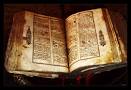
The Museum’s Library and Archives has digitised its oldest book, Historia Naturalis, to mark the tenth anniversary of the Biodiversity Heritage Library (BHL). See the physical copy on tour The original copy of Historia Naturalis will feature in the Museum’s international tour of some of its treasures, which begins in 2017 in Tokyo. The book is a small, unassuming volume that has been part of the ‘rare books’ collection for years but has attracted very little attention. Digital collections This digitisation project was part of the Museum’s Digital Collections Programme, which aims to make available the information found within the collections, from specimens to labels and archives. Expert preparation This project was carried out using specialist imaging and handling equipment to ensure that no physical damage occurred to the 547-year-old book. ‘Not that you can ever replace the sense of history and wonder of the actual physical item,’ adds Hart. Its author is Roman philosopher and scholar Gaius Plinius Secundus, commonly known as Pliny the Elder (AD 23-79). Questo e el libro che tracta di mercatantie et usanze de paesi The meaning of the title is ‘Book about the merchandise and customs of countries’. Each volume’s lead letter is painstakingly decorated (or illuminated) – a work of art in itself. More thorough readers may notice, however, descriptions such as that of headless people with eyes on their shoulders. Pacioli includes a chapter on tariffs in his book and it is obvious that a large part of this chapter is a copy of Chiarini’s earlier work. Written in Italian and intended for merchants, it is also known as a ‘tariff’ that merchants would use as a compendium of relative weights, measures and currencies when travelling and doing business with various European cities. This 1481 edition is the first printed version of the work. That honour goes to Questo e el libro che tracta di mercatantie et usanze de paesi, the last page recording that it was published in ‘MCCCCLXXXI. Historical Accounting Literature The ICAEW collection of historical accounting literature currently comprises around 3,000 volumes and includes works published from the 15th century to the early 20th century. Its 37 volumes spanned all knowledge of natural history at the time as well as mathematics, literature and art. The Museum’s copy is one of only 100 first editions. Visitors to the BHL website will be able to browse the book’s subjects – ranging from cosmology to animals and magic to botany – as related by Pliny around 2,000 years ago. The book provides and compares prices for a long list of cities in Italy and other major trading centres of Europe. A number of such bizarre passages show that Pliny and his contemporaries did not test all 37,000 entries. The collection includes books and journals in a variety of languages. Natural history, but not as we know it As one of the BHL’s founding institutional members, the Museum has digitised its copy of Historia Naturalis, which in turn will be the BHL’s oldest digitised book. The original Latin text will include a link to an English version, translated and edited in the nineteenth century by John Bostock and H T Riley. The oldest book in the ICAEW collection ICAEW has been collecting early works on accountancy for over 100 years and has one of the finest collections in the world, spanning the 15th century to the early 20th century. Historia Naturalis was one of the first manuscripts ever printed and, perhaps more importantly, the first published natural history book. The collection includes a copy of the earliest known printed book about double-entry book-keeping, Summa de arithmetica by Luca Pacioli However – this famous volume is NOT the oldest book in the library. Buy the book. Ongoing projects include digitising Mesozoic-Era collections as well as more than half a million butterflies and moths from the British Isles. Much of the paper nowadays is made from wood pulp and has been chemically treated, as opposed to the rag paper which was used for Historia Naturalis.’ The ancient first-edition copy of Historia Naturalis requires careful handling Not only does digitising Historia Naturalis benefit online visitors, it provides the Museum with a copy for preservation purposes. In addition to being an invaluable resource, the first edition is also beautiful to look at. There is no author named in the book but it is usually attributed to Giorgio di Lorenzo Chiarini. The Museum Library has so far contributed to the BHL 8,020 volumes from 1,096 titles, amounting to almost four million pages.