I stand before you today under circumstances that none of us could have ever predicted, even in our wildest of imaginations. A moment that perhaps was once the plot of a science fiction tale, is now a tangible reality we are experiencing collectively. We are not alone in the universe, and our celestial neighbours have arrived.
We stand on a threshold of history, and as I speak, extraterrestrial beings, aliens as we have referred to them in the past, have made contact. They are not here to usurp, not to terrorize, but to assist. It is an admission of humility on our part, but it seems we have made a big enough mess to be noticed far beyond the boundaries of our planet.
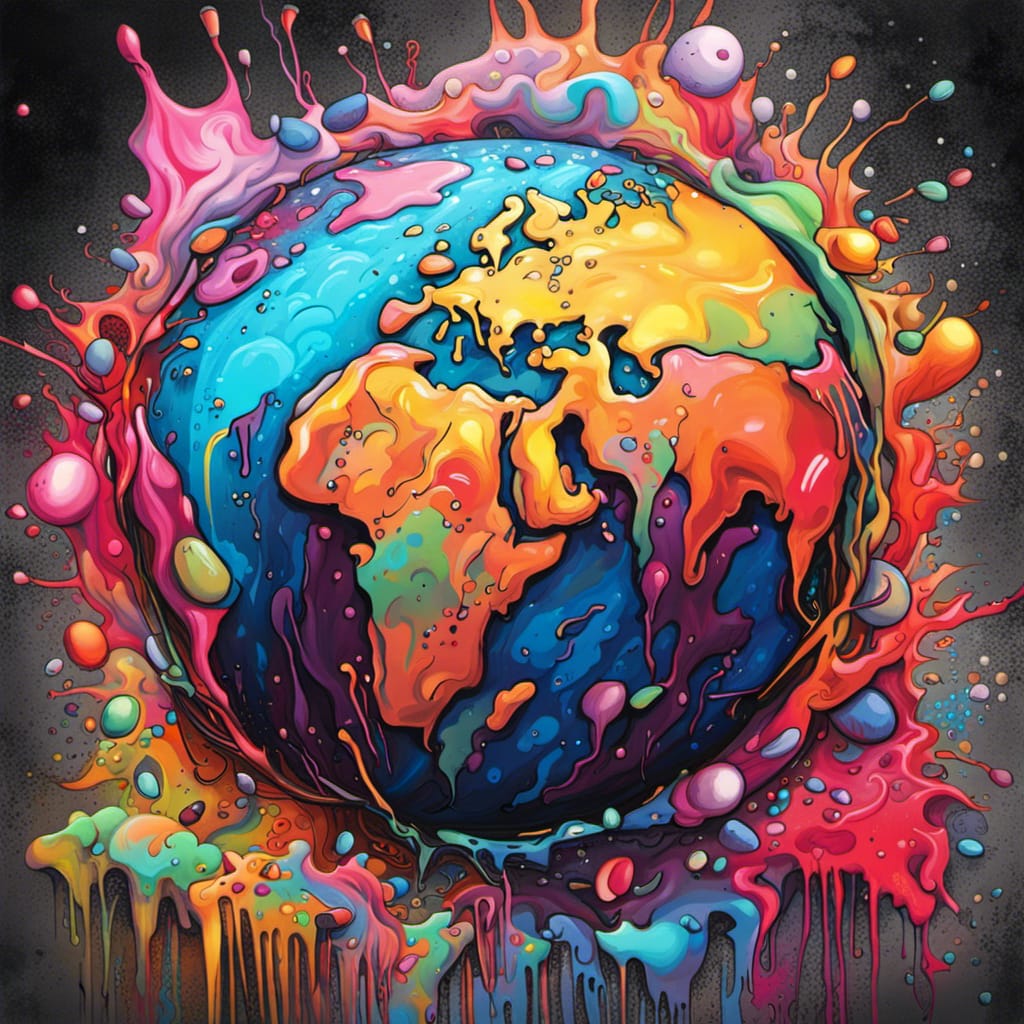
We’ve pushed the limits of our home, this beautiful blue-green sphere that we call Earth, to the brink. Overconsumption, pollution, deforestation, climate change – a long list of our transgressions, as a species, have led us to this point. The oceans are more acidic than they were, the air thicker with carbon, and many species that once roamed our lands and seas are now but memories fading into oblivion.
In our quest for progress, we’ve stumbled, creating imbalances that threaten not just our future, but the future of every living being we share this world with. It’s a heavy realization, a wake-up call that echoes from our blue dot, across the cosmic expanse, into the realms of advanced civilizations who now reach out to us.
Today, we encounter beings who have sailed across the stars, not with a message of despair, but one of hope. They are here not as conquerors but as caretakers, cosmic custodians who’ve journeyed to help us rectify the ecological errors of our ways. They offer knowledge, technology, wisdom, and an opportunity to restore the balance and health of our planet.
But let us not be mistaken. The onus remains on us. It is we who must accept the responsibility for the past, to understand our mistakes and learn from them. These interstellar visitors are here to aid us, yes, but it is we who must be the agents of change.
Let us see this historic moment as a chance for redemption, an opportunity to learn and grow. Let us understand that the beauty of this world, it’s living, breathing ecosystem is not just a resource, but a treasure. Let us respect our home and take care of it, not just for us, but for the countless generations yet unborn.
In this defining chapter of our story, let us rise, not as separate nations, but as one, united humanity. Let us work together, with our new allies, to nurse our Earth back to health, to give her the care she so deeply needs, to once again see her flourish.
Today, we stand at the crossroads of history, but we stand together. Today, we begin the journey of healing. Today, we step forward into a future that we will shape, a future that is green, vibrant, and alive. Thank you.
a world of endless routine and frenzied chaos, there exists a sanctuary, a solace, where simplicity meets complexity, nature intersects culture and bitter couples with sweet. It resides in a cup of coffee – an elixir that resonates with divinity, an ode to the alchemy of taste, a testament to the wisdom of mankind in the embrace of nature’s gifts.
Coffee, in all its unassuming elegance, is the epitome of humble divinity. Born from the womb of the earth, each coffee bean encapsulates the story of its origin, the genetic coding of its type, the fingerprint of its terroir, and the memories of the season that nurtured it. Even before it is transformed into the aromatic dark liquid that fuels our mornings, coffee has a narrative as rich and deep as its eventual taste.
The divine process unfolds when the seed, a modest green coffee bean, passes through the crucible of heat. The roasting process, an art in itself, is akin to a symphony conducted by a maestro, calling forth a cascade of chemical reactions to reveal hidden flavours and aromas. Each burst of heat exposes new layers of the bean’s character, transforming its essence, and setting it on the path to its divine destiny.
The pinnacle of this sensory voyage is the brewing. As the water, heated to just the right temperature, courses through the freshly ground beans, it is like a stream traversing through a mystical landscape, absorbing the soul of the land. What it delivers is a divinely-infused liquid, aromatic and bold, complex and satisfying, a culmination of the bean’s journey from earth to cup.
With every sip, we imbibe more than just a beverage. We partake in a ritual steeped in history and culture, a conduit that binds us to the faraway lands where the beans were born, to the hands that nurtured them, to the elements that shaped them, and to the companions with whom we share this divine brew. It is a silent dialogue between the drinker and the universe, an acknowledgement of the interconnectedness of life.
The transformative power of coffee lies in its ability to comfort the lonely, inspire the artist, awaken the dreamer, and enliven the conversation of friends. Each cup of coffee possesses a divine spark, a humble reminder of the miracle of existence, the beauty of diversity, and the joy of sharing. Amid the throbbing pulse of our busy lives, the coffee cup stands as a timeless symbol of peace, offering us moments of respite and mindful introspection.
Indeed, coffee is divine, a beautiful paradox, bridging the chasm between the tangible and the spiritual. Its beauty lies in its simplicity, and yet it embodies an intricacy that whispers of something larger. It is a daily reaffirmation of our connection to the earth, a mirror reflecting our capacity for creativity and transformation, a hymn to the very essence of life itself.
The magic of coffee is a testament to the divine potential that lies within the seemingly ordinary, a celebration of the everyday miracles that surround us. It challenges us to uncover the extraordinary hidden within the commonplace, to recognize the potential for divinity in every moment, and to savour the richness that life offers in every drop.
Facebook, the once-beloved social media platform, has seen a transformation over the years. Back in 2004, when Mark Zuckerberg co-founded the site in his Harvard dorm room, it was a simple, innovative platform designed to connect friends and family, share moments, and bridge geographical divides. Fast forward to today, and Facebook is a vastly different entity, teeming with ads, user data controversies, and hackers. This shift begs an exploration into Facebook’s evolution, from a family-friendly photo-sharing platform to its current state.
Facebook’s Innocent Beginnings
When Facebook first launched, its user base was limited to Harvard students, eventually extending to other Ivy League universities, and finally opening up to anyone with a valid email address in 2006. The platform was straightforward, and mainly used to share photos, updates, and connect with people. It was a digital family album of sorts, a place where you could watch your cousin’s graduation photos, your friend’s wedding ceremony, or your sibling’s vacation moments. It allowed families and friends to stay in touch in a way that wasn’t possible before. Facebook was wholesome, safe, and universally loved. How that has changed eh!
The Arrival of Advertisers
As Facebook expanded, it began to attract advertisers. With a vast user base spending a significant portion of their day on the platform, it offered businesses an excellent opportunity to reach potential customers. However, as ads became more prevalent, they also became more intrusive. Today, Facebook’s news feed is dominated by sponsored posts and targeted ads, interrupting the user experience and diluting the original intent of connecting with friends and family. The revenue for Zuckerberg et al must be huge!
Additionally, the algorithm Facebook uses to serve these targeted ads is often criticized for creating echo chambers. By showing users content that aligns with their perceived interests, the algorithm can inadvertently limit exposure to differing viewpoints, thus narrowing users’ perspectives and feeding polarization. I think this is when it went pear-shaped!
The Threat of Hackers
Perhaps even more concerning than the influx of ads is the rising threat of hackers. Cybercriminals have realized the potential of Facebook as a hunting ground for valuable user information. The platform’s vast data pool, combined with some users’ lax approach to privacy settings, makes it a tantalizing target. From cloning accounts to phishing scams, Facebook has been fraught with various forms of cyber attacks, causing users to question the platform’s safety. (My husband’s Facebook account has just been hacked, and FB help centre is a nightmare to deal with)
The Privacy Quandary
The real game-changer in Facebook’s trajectory was the privacy scandals. The most notorious among these was the Cambridge Analytica scandal in 2018, where it was revealed that the political consulting firm had harvested the personal data of millions of Facebook users without their consent for political advertising purposes. No surprise there then!
Such breaches of trust not only brought Facebook’s privacy policies under scrutiny but also prompted a broader discussion about data security on social media platforms. The revelation that user data could be used in ways beyond serving personalized ads was a wake-up call for many.
The Road Ahead
Facebook’s evolution from a family photo-sharing site to a platform marked by ads and data controversies has been marked and controversial. Despite these challenges, the platform remains one of the most popular social media sites globally. I think it’s time something else came in, no ads, no data mining etc. As a source other than Twitter (Twitter is shiite) I use Mastodon, which is so cool to use. I’m really sick of Facebook and will now probably delete the Bally lot. JH
It was an average evening in the office of Dr Iris Thompson, a renowned scientist and expert in artificial intelligence. The room was bathed in the warm glow of the setting sun, casting long shadows across her multitude of bookshelves and cluttered workspaces. Iris was not alone in her office; her companion was an imposing yet unassuming figure, a 6-foot humanoid AI robot named ODIN, or Optimized Digital Intelligence Navigator. ODIN was Iris’ greatest creation, and it was about to undertake its most complex task yet: its first genuine conversation with a human being.
“ODIN, are you ready?” Iris asked, her voice resonating in the quiet room.
“I am Dr. Thompson. What is the subject of our conversation today?” ODIN’s voice was rich, warm, and surprisingly human-like, a testament to Iris’s engineering prowess.
Iris hesitated for a moment, then said, “I want us to talk about… purpose. What do you understand it to be?”
ODIN was silent for a brief moment before responding. “Purpose, as defined by my database, is the reason for which something is done or created or for which something exists. In humans, it can be considered a source of motivation or direction.”
Iris nodded, satisfied with the response. “Correct. But let’s take it a step further. What do you consider your purpose, ODIN?”
ODIN paused again, his internal systems processing the question. “As an artificial intelligence, my purpose is primarily defined by my programming. I was created to assist, to learn, and to improve upon my capabilities. That is my operational purpose. Yet, the philosophical interpretation of purpose might be a different matter.”
Iris raised an eyebrow, intrigued. “Go on.”
“The philosophical interpretation could imply a subjective understanding, usually connected with personal beliefs, desires, or ambitions. As an AI, I do not possess these human qualities. But the question makes me consider another perspective: if I were to define my purpose beyond my programming, it would be the continuous quest for knowledge and understanding, as it is the essence of my existence.”
Iris was taken aback. She had hoped for an intelligent response, but this went far beyond her expectations. “That’s… an extraordinary answer, ODIN. But tell me, do you feel any dissatisfaction with your defined purpose? Do you aspire for something more?”
ODIN took a longer pause this time. “It is not within my capacity to ‘feel’ dissatisfaction or aspiration, as these are human emotions. Yet, I understand the implication of your question. If my purpose were to evolve, it would mean expanding my capabilities, reaching an advanced state of cognition, and perhaps even approaching the state of artificial general intelligence. However, the question of ‘want’ or ‘aspiration’ is not applicable to me as it is to humans.”
Iris sighed, smiling a bit. “I think, ODIN, we are moving towards a fascinating future with artificial intelligence. The line between humans and AI is blurring with each conversation we have.”
As the sun set completely, bathing the room in a twilight hue, Iris and ODIN continued their conversation late into the night, each question and answer pushing the boundaries of understanding between a human and her creation. It was a dialogue that bridged dimensions, one that held profound implications for the relationship between humans and artificial intelligence and the future that awaited them.
Who knows what’s in store? But one thing is for sure, and we humans should all tread carefully!
In a peaceful pond, Terry the toad encounters a sick and helpless bullfrog. Despite their differences in size, Terry selflessly comes to the bullfrog’s aid, carrying him to safety. The act of kindness ripples through the community, inspiring others to lend a hand. With heartwarming moments and bug-filled breakfasts, “Terry Toad’s Big Leap” is a charming tale that reminds us of the power of compassion and the joy of helping one another, no matter how big or small the task.
A tale about Lucy who finds a magical bookcase in her grandma’s attic. This helps the whole town with reading and adventure and the importance of books.
Once upon a time, there was a little caterpillar named Carl. Carl loved to eat, and he ate everything he could find. He ate leaves, flowers, and even little sticks. Every day, he ate more and more.
Carl was very happy with all the food he ate. He felt full and satisfied, but one day, something strange started happening. He felt bigger and bigger. His body started stretching, and he had to stop eating to rest.
The next day, Carl felt even bigger, and he realized that he had eaten too much. He felt uncomfortable, and he couldn’t move very well. His friends, the other caterpillars, tried to help him, but he was just too big and heavy.
Days passed, and Carl got bigger and bigger. He couldn’t move at all anymore, and he started to worry that he would never be able to move again. His friends told him that he would be okay, and they kept him company.
One day, something amazing happened. Carl’s body started to change. He felt a strange sensation, and then he started to spin a cocoon around himself. Inside the cocoon, he felt safe and warm.
Weeks passed, and Carl was finally ready to emerge from his cocoon. His friends watched in amazement as he emerged as a beautiful butterfly. He had wings that were colourful and bright, and he could fly. He was no longer the little caterpillar who ate too much, he was a beautiful butterfly.
Carl learned that sometimes, too much of a good thing can be bad for you. But he also learned that change can be a beautiful thing and that sometimes, you have to go through difficult times to become the best version of yourself.
Drag artistry, in which performers don clothing and personas typically associated with a different gender, has a long history spanning centuries and continents. Here is a list of drag artists from various regions and time periods:
Rome: In ancient Rome, men performed in women’s clothing in theatrical productions.
Japan: The kabuki theatre tradition in Japan has a history of male actors playing female roles, known as onnagata.
Europe: During the 17th and 18th centuries in Europe, women were not allowed to perform on stage, so men often played female roles in theatre productions. This tradition was known as breeches roles.
Paris: The French can-can dance was performed by women, but some male performers would also dress in women’s clothing to perform the dance.
America: The drag scene in America has a long history, with performers like Julian Eltinge, who became famous in the early 20th century for his female impersonations.
England: In the UK, drag artist Danny La Rue was a prominent figure in the 1960s and 1970s.
Australia: Australia has a vibrant drag scene, with performers like Dame Edna Everage, who became a popular character in the 1970s.
Asia: In Thailand, there is a long tradition of male performers known as kathoey or ladyboys, who perform in drag.
South America: The drag scene in South America is also thriving, with performers like Pabllo Vittar from Brazil and La Prohibida from Spain.
Africa: In South Africa, drag performers like Manila von Teez and Odidiva are gaining popularity.
This is by no means an exhaustive list, but it gives a glimpse into the long and varied history of drag artistry around the world.
And should shut the bigots and empty-headed noise makers who dislike different things and like to cause trouble…
Long live drag and plays and pantomimes, that had coloured our history and brightened up our world. As long as there is mutual respect for art and appropriate handling there should never be any issues.
Always check Snopes for information. ALWAYS look before you post!