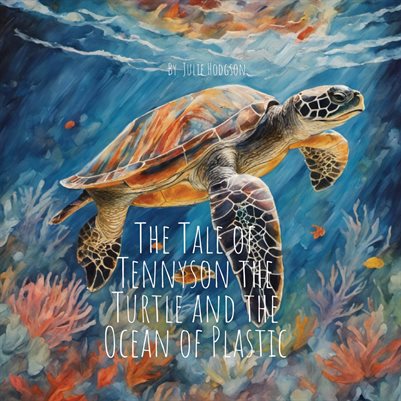
By Julie Hodgson in Childrens fun books
24 pages, published 8/16/2023
By Julie Hodgson in Childrens fun books
24 pages, published 8/16/2023

Once whispered words take flight, do beware,
Upon the winds of gossip, secrets bare.
In the marketplace, under the tree,
Tales travel far, as far and free.
With eager ears and lips untamed,
A reputation can be stained.
Like wildfire, it can quickly spread,
Feeding on the rumours fed.
Innocent whispers turn to roars,
Escaping through the unlocked doors.
And in its wake, the damage done,
A trust broken; a friendship gone.
How dangerous the idle chatter,
Reputations to tatter.
From ear to ear, the stories weave,
Truth is lost, we misperceive.
A spark ignited by a word,
Once was clear, now is blurred.
In this game, we all are pawns,
Dawn to dusk, dusk to dawn.
Beware the perils, mind your speech,
For words are far more than just each.
They carry power, they bear weight,
Can mend or mar a person’s fate.
The gift of speech, so precious, rare,
Handle it with utmost care.
Think before the words take flight,
Foster truth, bring forth the light.
So, shun the path where gossip lies,
In silent wisdom, true strength lies.
Let kindness be your spoken song,
In a world where words can right or wrong.

In a garden filled with laughter and cheer,
Lived Sunny the Sunflower, who had an idea so clear.
She looked at the sky, both the sun and the rain,
And knew that the planet needed us, again and again!
With a leafy green smile and petals so bright,
Sunny decided to set things just right.
She called on her friends, from the garden they came,
Each wanting to join in this climate care game.
Benny the Bee buzzed, “I’ll plant flowers with you!”
Freddy the Frog croaked, “I’ll save water too!”
Wendy the Worm wiggled, “I’ll compost the waste!”
Together they decided to act with great haste.
They started to garden, using water with care,
Planting more trees and cleaning the air.
They recycled and reused, with joy in their hearts,
Knowing each small effort was a wonderful start.
Sunny told stories of ice and of snow,
Of polar bear friends who had nowhere to go.
Of forests and jungles and oceans so deep,
Their care for the planet was a promise to keep.
Little by little, they all did their part,
Showing young readers where they too could start.
A bottle, a can, a bicycle ride,
There’s so much to do, with your friends by your side!
In the garden they danced, in a world so divine,
Knowing that caring was a sign of the time.
So, let’s be like Sunny and all of her friends,
Take care of our Earth, on that we depend!
Remember to water, to plant, and to grow,
Love the Earth and let your care show.
From the smallest of seeds to the tallest of trees,
Every little helps, as easy as a breeze!
With a hug and a smile, they ended their day,
Knowing they’d made a difference in a wonderful way.
So, children, take note from this garden so dear,
Climate care’s fun, have no doubt, have no fear!
Join Sunny and friends in the garden of life,
Treat Earth with love and reduce all strife.
For our planet is precious, a gem to behold,
Its story’s most beautiful, its future untold.
In a world that is perpetually enmeshed in a multitude of crises and predicaments, where we claim to stand for human rights and equality, it seems that the societal lens through which we view these issues is grossly unequal. This has been demonstrated in a recent chain of events where five affluent individuals vanished in a submarine and the world mobilized in their search, while, in the same breath, 750 refugees remained in peril at sea, yet the world remained, chillingly, indifferent. It is these contrasting responses that force us to ask: what kind of society are we living in?
First, it is important to understand the driving forces behind this selective attention. Wealth, power, and influence undeniably shape the narratives that dominate our global consciousness. Sadly it’s always the case. The plight of the five wealthy individuals was immediately propelled to the forefront of public attention. (remember when the Notre-Dame burned and how fast it was rebuilt) Broadcasts, news articles, and social media posts flooded our feeds, all underlining the urgency of their plight. And yet, the refugee crisis, a human tragedy on a vastly larger scale, was relegated to the peripheries of our collective attention.
The reality is, we live in a society that is inherently biased towards wealth and status. How sad is that? When those with resources and influence find themselves in precarious situations, our systems react promptly and decisively. We are drawn to the sensational, the extraordinary, and the rare. It’s a narrative that sells, captivates audiences, that keeps people engaged. But in doing so, it distracts us from ongoing, systemic issues – those that affect hundreds, thousands, or even millions of individuals.
On the other hand, the situation of the 750 refugees in peril at sea, (not 500) while no less tragic, has become a normalized narrative. A bit like mass shootings in the USA sadly! News of their struggle is not novel; it is an ongoing crisis that has, unfortunately, become a regular part of our daily news consumption. This desensitization towards the refugee crisis reflects a broader societal apathy towards issues that seem too immense and too complex to tackle.
This dichotomy also highlights an uncomfortable truth about the value we place on human lives. The societal response to these events implies a distressing hierarchy of worth, where a handful of affluent individuals apparently warrant more concern than hundreds of desperate refugees.
What kind of society would permit such a paradigm? The answer is one marked by inequality, apathy, and an imbalanced distribution of empathy. However, it is also one that possesses the potential for change.
For starters at least, we must confront our collective biases and engage with these complex, systemic issues in meaningful ways. By acknowledging the imbalances in our societal lens, we can begin to shift our focus, reassess our priorities, and create a more balanced, empathetic narrative.
The media can play a transformative role in shaping this narrative. Being a freelance journalist myself, I understand why they do it. But still do not understand why if you get my meaning. I’m at loggerheads with myself!
By presenting the plight of the marginalized and the affluent in an equitable light, it can help to humanize the struggles of the less privileged and break down the dehumanizing stereotypes often associated with refugees.
We must advocate for policy change. Our governments and institutions must respond to these crises not based on the wealth or status of the individuals involved, but on the principles of human dignity, empathy, and fairness. Do we think this will happen? Hmmm, One can but hope.
While the disparity in responses to these recent events paints a bleak picture of our current society, it also presents an opportunity for introspection and change. By acknowledging our biases and working actively to overcome them, we can strive towards a society where every life is valued equally, regardless of wealth or status. It’s a massive undertaking, but one that could redefine the very fabric of our societal values for the better. Would be lovely if we could just do it!

Upon this fragile Earth, our shared abode,
In woven tapestry of life, we thread.
Through common grace, let peace be our mode,
With hearts united, by compassion led.
Each sunset’s hue, each morning’s gentle light,
Unfolds in every land, for every eye.
Bound not by borders, shared is the night,
The moon’s soft glow in each and every sky.
Let’s halt the echo of the war drums’ beat,
And weave a song of peace, in words so sweet.
Our differences can make the whole complete,
For peace’s victory, let hate’s retreat.
So, let us choose to walk this gentle path,
Where love’s the guide, and peace the aftermath.


I stand before you today under circumstances that none of us could have ever predicted, even in our wildest of imaginations. A moment that perhaps was once the plot of a science fiction tale, is now a tangible reality we are experiencing collectively. We are not alone in the universe, and our celestial neighbours have arrived.
We stand on a threshold of history, and as I speak, extraterrestrial beings, aliens as we have referred to them in the past, have made contact. They are not here to usurp, not to terrorize, but to assist. It is an admission of humility on our part, but it seems we have made a big enough mess to be noticed far beyond the boundaries of our planet.
We’ve pushed the limits of our home, this beautiful blue-green sphere that we call Earth, to the brink. Overconsumption, pollution, deforestation, climate change – a long list of our transgressions, as a species, have led us to this point. The oceans are more acidic than they were, the air thicker with carbon, and many species that once roamed our lands and seas are now but memories fading into oblivion.
In our quest for progress, we’ve stumbled, creating imbalances that threaten not just our future, but the future of every living being we share this world with. It’s a heavy realization, a wake-up call that echoes from our blue dot, across the cosmic expanse, into the realms of advanced civilizations who now reach out to us.
Today, we encounter beings who have sailed across the stars, not with a message of despair, but one of hope. They are here not as conquerors but as caretakers, cosmic custodians who’ve journeyed to help us rectify the ecological errors of our ways. They offer knowledge, technology, wisdom, and an opportunity to restore the balance and health of our planet.
But let us not be mistaken. The onus remains on us. It is we who must accept the responsibility for the past, to understand our mistakes and learn from them. These interstellar visitors are here to aid us, yes, but it is we who must be the agents of change.
Let us see this historic moment as a chance for redemption, an opportunity to learn and grow. Let us understand that the beauty of this world, it’s living, breathing ecosystem is not just a resource, but a treasure. Let us respect our home and take care of it, not just for us, but for the countless generations yet unborn.
In this defining chapter of our story, let us rise, not as separate nations, but as one, united humanity. Let us work together, with our new allies, to nurse our Earth back to health, to give her the care she so deeply needs, to once again see her flourish.
Today, we stand at the crossroads of history, but we stand together. Today, we begin the journey of healing. Today, we step forward into a future that we will shape, a future that is green, vibrant, and alive. Thank you.

a world of endless routine and frenzied chaos, there exists a sanctuary, a solace, where simplicity meets complexity, nature intersects culture and bitter couples with sweet. It resides in a cup of coffee – an elixir that resonates with divinity, an ode to the alchemy of taste, a testament to the wisdom of mankind in the embrace of nature’s gifts.
Coffee, in all its unassuming elegance, is the epitome of humble divinity. Born from the womb of the earth, each coffee bean encapsulates the story of its origin, the genetic coding of its type, the fingerprint of its terroir, and the memories of the season that nurtured it. Even before it is transformed into the aromatic dark liquid that fuels our mornings, coffee has a narrative as rich and deep as its eventual taste.
The divine process unfolds when the seed, a modest green coffee bean, passes through the crucible of heat. The roasting process, an art in itself, is akin to a symphony conducted by a maestro, calling forth a cascade of chemical reactions to reveal hidden flavours and aromas. Each burst of heat exposes new layers of the bean’s character, transforming its essence, and setting it on the path to its divine destiny.
The pinnacle of this sensory voyage is the brewing. As the water, heated to just the right temperature, courses through the freshly ground beans, it is like a stream traversing through a mystical landscape, absorbing the soul of the land. What it delivers is a divinely-infused liquid, aromatic and bold, complex and satisfying, a culmination of the bean’s journey from earth to cup.
With every sip, we imbibe more than just a beverage. We partake in a ritual steeped in history and culture, a conduit that binds us to the faraway lands where the beans were born, to the hands that nurtured them, to the elements that shaped them, and to the companions with whom we share this divine brew. It is a silent dialogue between the drinker and the universe, an acknowledgement of the interconnectedness of life.
The transformative power of coffee lies in its ability to comfort the lonely, inspire the artist, awaken the dreamer, and enliven the conversation of friends. Each cup of coffee possesses a divine spark, a humble reminder of the miracle of existence, the beauty of diversity, and the joy of sharing. Amid the throbbing pulse of our busy lives, the coffee cup stands as a timeless symbol of peace, offering us moments of respite and mindful introspection.
Indeed, coffee is divine, a beautiful paradox, bridging the chasm between the tangible and the spiritual. Its beauty lies in its simplicity, and yet it embodies an intricacy that whispers of something larger. It is a daily reaffirmation of our connection to the earth, a mirror reflecting our capacity for creativity and transformation, a hymn to the very essence of life itself.
The magic of coffee is a testament to the divine potential that lies within the seemingly ordinary, a celebration of the everyday miracles that surround us. It challenges us to uncover the extraordinary hidden within the commonplace, to recognize the potential for divinity in every moment, and to savour the richness that life offers in every drop.
Facebook, the once-beloved social media platform, has seen a transformation over the years. Back in 2004, when Mark Zuckerberg co-founded the site in his Harvard dorm room, it was a simple, innovative platform designed to connect friends and family, share moments, and bridge geographical divides. Fast forward to today, and Facebook is a vastly different entity, teeming with ads, user data controversies, and hackers. This shift begs an exploration into Facebook’s evolution, from a family-friendly photo-sharing platform to its current state.
When Facebook first launched, its user base was limited to Harvard students, eventually extending to other Ivy League universities, and finally opening up to anyone with a valid email address in 2006. The platform was straightforward, and mainly used to share photos, updates, and connect with people. It was a digital family album of sorts, a place where you could watch your cousin’s graduation photos, your friend’s wedding ceremony, or your sibling’s vacation moments. It allowed families and friends to stay in touch in a way that wasn’t possible before. Facebook was wholesome, safe, and universally loved. How that has changed eh!
As Facebook expanded, it began to attract advertisers. With a vast user base spending a significant portion of their day on the platform, it offered businesses an excellent opportunity to reach potential customers. However, as ads became more prevalent, they also became more intrusive. Today, Facebook’s news feed is dominated by sponsored posts and targeted ads, interrupting the user experience and diluting the original intent of connecting with friends and family. The revenue for Zuckerberg et al must be huge!
Additionally, the algorithm Facebook uses to serve these targeted ads is often criticized for creating echo chambers. By showing users content that aligns with their perceived interests, the algorithm can inadvertently limit exposure to differing viewpoints, thus narrowing users’ perspectives and feeding polarization. I think this is when it went pear-shaped!
Perhaps even more concerning than the influx of ads is the rising threat of hackers. Cybercriminals have realized the potential of Facebook as a hunting ground for valuable user information. The platform’s vast data pool, combined with some users’ lax approach to privacy settings, makes it a tantalizing target. From cloning accounts to phishing scams, Facebook has been fraught with various forms of cyber attacks, causing users to question the platform’s safety. (My husband’s Facebook account has just been hacked, and FB help centre is a nightmare to deal with)
The real game-changer in Facebook’s trajectory was the privacy scandals. The most notorious among these was the Cambridge Analytica scandal in 2018, where it was revealed that the political consulting firm had harvested the personal data of millions of Facebook users without their consent for political advertising purposes. No surprise there then!
Such breaches of trust not only brought Facebook’s privacy policies under scrutiny but also prompted a broader discussion about data security on social media platforms. The revelation that user data could be used in ways beyond serving personalized ads was a wake-up call for many.
Facebook’s evolution from a family photo-sharing site to a platform marked by ads and data controversies has been marked and controversial. Despite these challenges, the platform remains one of the most popular social media sites globally. I think it’s time something else came in, no ads, no data mining etc. As a source other than Twitter (Twitter is shiite) I use Mastodon, which is so cool to use. I’m really sick of Facebook and will now probably delete the Bally lot. JH