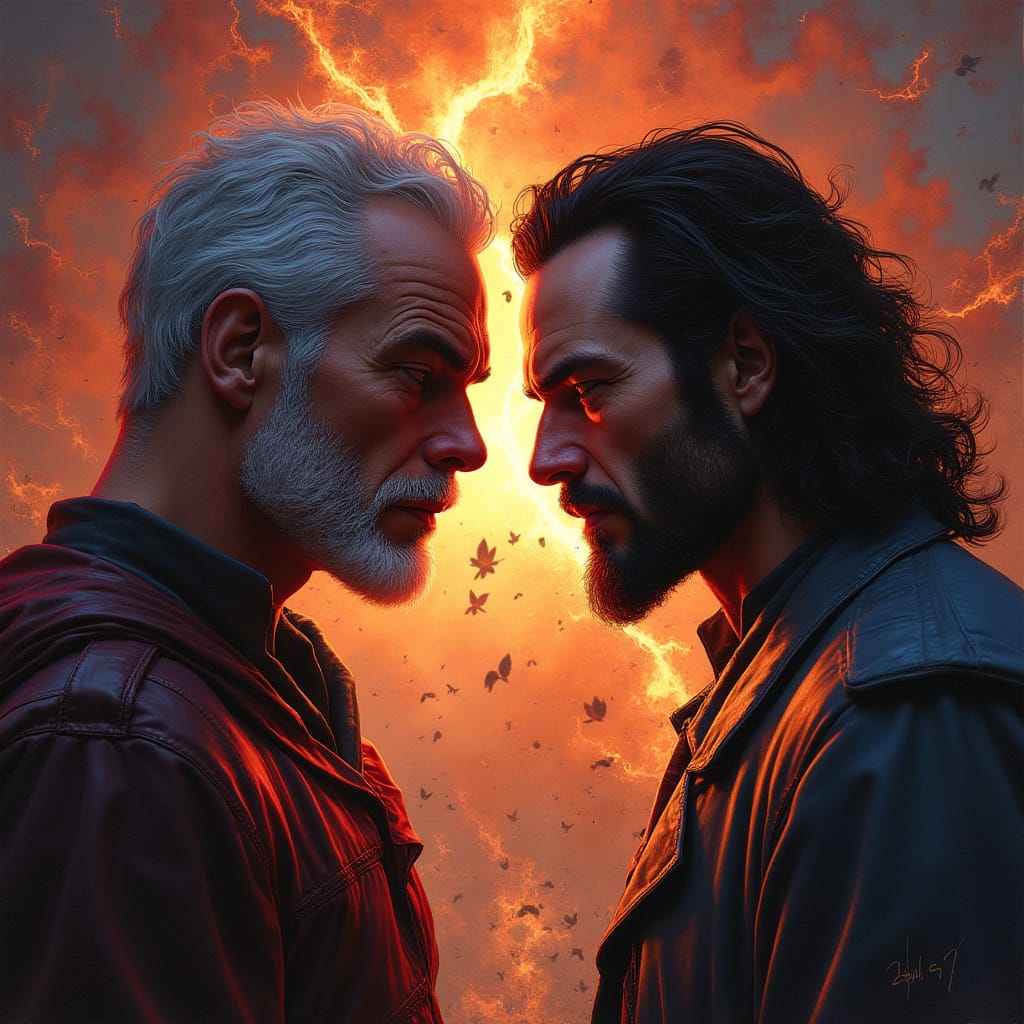
The world has always been a place of duality—light and dark, good and evil, generosity and greed. This contrast exists in nature, human behaviour, and politics because balance often defines existence. In every society, there are those who act selflessly, striving for fairness and justice, while others manipulate systems for personal gain. Political ideologies reflect this divide, with some leaders seeking to uplift their people, while others exploit power for wealth and control. The struggle between good and bad is an inherent part of human nature, shaping the world in ways that ensure no singular force dominates completely.
In politics, this duality is especially evident. Some politicians work tirelessly for the well-being of their citizens, advocating for equality, social welfare, and economic stability. However, there are also those who prioritise personal ambition, using corruption, misinformation, and divisive tactics to maintain power. Greed plays a significant role in this, as those in positions of influence often put their interests above the needs of the public. This self-serving mindset can lead to policies that benefit the few while leaving the majority struggling. The pursuit of power and wealth can blind individuals to the suffering they cause, allowing greed to override morality.
People can be driven by an insatiable desire for more—more money, more power, more control—without considering the consequences of their actions. Greed strips individuals of empathy, making them prioritise their own gain at the expense of others. ( I could name a few!) This can be seen in corporate greed, where profit is placed above human welfare, and in politics, where leaders make decisions that benefit their interests rather than society. While there will always be those who fight for fairness and progress, the presence of greed ensures that the battle between good and bad will never truly end.
Humankind’s relationship with the Earth is often framed through the lens of ownership. We parcel out the land, erect borders, and declare sovereignty, all while ignoring a fundamental truth: the Earth does not belong to us. Our obsession with possession, marked by the division of the planet into nations and properties, is both a reflection of the human ego and a failure to recognise the transience of our existence. In the universe’s grand scheme, this notion of ownership is as inconsequential as two fleas arguing over which dog they inhabit. Leaders who want land from another country are delusional, at the very least! By understanding the futility of land ownership and borders, we can begin to reimagine a world rooted in unity, cooperation, and respect for the planet.
The Earth: A Shared Home Beyond Ownership
The Earth existed long before humans walked upon it and will persist long after we are gone. Mountains, oceans, and forests are not commodities to be claimed; they are elements of a shared habitat that supports countless forms of life. To claim ownership over land is to deny the interconnectedness of existence, reducing the vast, dynamic planet into a mere asset.
Ownership implies permanence, yet our time on Earth is fleeting. When we die, the land remains, unburdened by the artificial boundaries we imposed upon it. This impermanence highlights the futility of treating land as something to be conquered or hoarded. Just as no single wave can claim the ocean, no human or nation can truly claim the Earth.
The Arbitrary Nature of Borders
Borders, the human-made lines dividing the Earth, are arbitrary constructs born of historical conflicts and power struggles. They are illusions that create the false idea of separation between people who share the same fundamental needs and desires. The natural world does not recognize these boundaries; rivers flow across nations, winds carry seeds across continents, and animals migrate freely.
These invisible lines often fuel division rather than unity. Wars are waged over land disputes, and countless lives are lost in the name of protecting or expanding borders. Yet, when viewed from space, the Earth is a seamless, borderless sphere—a reminder that the distinctions we fight over are self-imposed and ultimately meaningless.
A New Perspective: Stewardship Over Ownership
Instead of viewing the Earth as something to own, we should embrace the role of stewards. Stewardship emphasizes care and responsibility rather than possession. As stewards, we recognize that the planet is not ours to exploit but rather a shared resource to protect for future generations.
This shift in perspective would encourage cooperation over competition. Imagine a world where nations work together to address global challenges such as climate change, deforestation, and biodiversity loss, rather than vying for dominance over resources. By prioritizing the health of the planet over territorial claims, humanity could ensure its survival and foster a more equitable society.
Lessons from Nature
Nature offers countless examples of coexistence and mutual benefit. Ecosystems thrive through balance and interdependence, not domination or division. A forest, for instance, is a complex network where trees share resources and communicate through fungal networks in the soil. No single tree claims ownership over the forest; instead, they coexist, ensuring the survival of the entire system. Clever eh?
Humanity could learn much from this model. By abandoning the notion of ownership and borders, we can create systems that prioritize harmony and collective well-being over individual gain.
The Fleas on the Dog: A Humbling Analogy
The analogy of two fleas fighting over which dog they inhabit perfectly encapsulates the absurdity of land ownership and borders. Like fleas, humans are but temporary inhabitants of a much larger entity. Our squabbles over land are inconsequential in the face of the Earth’s immense scale and longevity.
This analogy serves as a humbling reminder of our place in the universe. Instead of fixating on ownership, we should focus on coexistence, recognizing that we are part of a greater whole.
A Call for Unity and Reverence
The idea that the Earth belongs to humans is a construct that serves to divide rather than unite. By clinging to borders and the illusion of ownership, we lose sight of the interconnectedness of all life and our shared responsibility to protect the planet. Don’t get me started on the Big companies ruining the world for profit...It should be time to move beyond these outdated notions and embrace a vision of stewardship, cooperation, and reverence for the Earth. Only then can humanity transcend its petty disputes and take its rightful place as a harmonious part of the natural world.
JH
Greed and profit, profit and greed…. tut tut grow up!

 Julan62