There should not be a left
or a right
Only a circle
where we sit close enough
to feel each other breathe
Politics learned the language of corners
sharp words
pointing fingers
maps drawn with rulers instead of hands
But the heart has no party
it votes every morning
for warmth
for safety
for the simple miracle of being seen
A border is just a sentence
written by fear
it says stop
it says yours not mine
it forgets the grammar of kindness
We are made of shared weather
shared grief
shared laughter spilling over pavements
like rain that refuses to choose a country
Imagine power that listens
laws that kneel to humanity
flags lowered just enough
to wrap the cold
Respect is not radical
Care is not naïve
They are ancient
older than slogans
older than walls
There should not be a left
or a right
only forward
together
hands open
voices softer
eyes brave enough to recognise themselves
in everyone else
A future where we do not win over each other
but with each other
where the loudest statement
is how gently
we choose to live
JH
Tag Archives: media
No Right No Left
Alligator Alcatraz: The American Mirror We Refuse to Face
There’s a sickness crawling through the heart of America, and no, it’s not new. It’s ancient. It’s the rusted chain rattling through centuries of history. But now it’s not even trying to hide.
Racism has stepped out of the shadows, dusted off its boots, and made itself at home. No more dog whistles. No more veiled language. It’s on the surface, slick and shameless, sitting in the front seat of power. Fueled by wealth. Driven by hate. And guarded by laws that pretend to serve justice, but really serve only the rich and pale-skinned privileged.
This isn’t paranoia. It’s policy.
People of colour, immigrants, the undocumented, the unprivileged they’re not just living under threat. They’re living under siege. At the border, in the neighbourhoods, in the courtrooms, in the schools. Detained without cause. Separated from children. Torn from homes. And the world just watches as if this were a movie, distant and fictional. But it’s not. It’s here. It’s real. It’s Alligator Alcatraz, a cold-blooded, state-sanctioned prison of fear.
The land of the free? Only if you can afford it. Only if you look the part.
Where are the morals? They’ve been auctioned off. Sold to the highest bidder with a PAC fund and a private jet. The Constitution gets quoted like scripture, but only the verses that benefit the gatekeepers. The rest is redacted black lines over brown bodies.
And so we ask: Why isn’t the world more angry?
Maybe because anger is exhausting.
Maybe because some people still don’t believe it’s happening.
Or worse maybe they do believe it, and they just don’t care.
But we care. And caring means we can’t stay quiet.
This Alcatraz of inhumanity, this Alligator that snaps at the heels of justice, must be shut down. Not just the physical camps or detention centres, but the mindset that built them. The machinery that feeds on fear. The silence that protects it.
Justice is not a luxury. It’s a birthright.
And those who have stripped it from others must be held accountable. No immunity. No exception.
This isn’t just about America. It’s a mirror to the world.
So let the world be angry.
Let it rise.
Let it roar.
Because silence is complicity, and we’re done whispering.
Been on my mind…… Boats and Subs
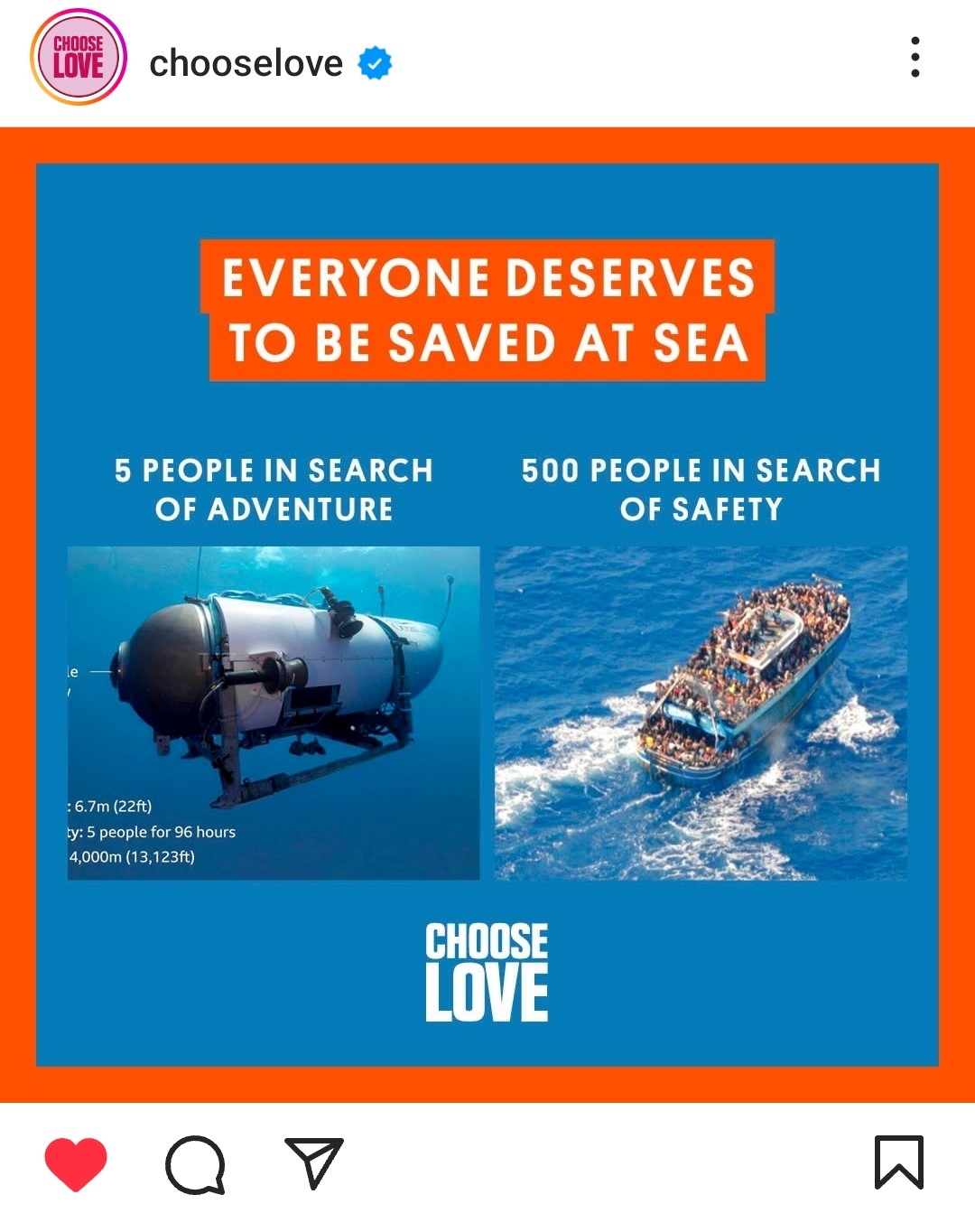
In a world that is perpetually enmeshed in a multitude of crises and predicaments, where we claim to stand for human rights and equality, it seems that the societal lens through which we view these issues is grossly unequal. This has been demonstrated in a recent chain of events where five affluent individuals vanished in a submarine and the world mobilized in their search, while, in the same breath, 750 refugees remained in peril at sea, yet the world remained, chillingly, indifferent. It is these contrasting responses that force us to ask: what kind of society are we living in?
First, it is important to understand the driving forces behind this selective attention. Wealth, power, and influence undeniably shape the narratives that dominate our global consciousness. Sadly it’s always the case. The plight of the five wealthy individuals was immediately propelled to the forefront of public attention. (remember when the Notre-Dame burned and how fast it was rebuilt) Broadcasts, news articles, and social media posts flooded our feeds, all underlining the urgency of their plight. And yet, the refugee crisis, a human tragedy on a vastly larger scale, was relegated to the peripheries of our collective attention.
The reality is, we live in a society that is inherently biased towards wealth and status. How sad is that? When those with resources and influence find themselves in precarious situations, our systems react promptly and decisively. We are drawn to the sensational, the extraordinary, and the rare. It’s a narrative that sells, captivates audiences, that keeps people engaged. But in doing so, it distracts us from ongoing, systemic issues – those that affect hundreds, thousands, or even millions of individuals.
On the other hand, the situation of the 750 refugees in peril at sea, (not 500) while no less tragic, has become a normalized narrative. A bit like mass shootings in the USA sadly! News of their struggle is not novel; it is an ongoing crisis that has, unfortunately, become a regular part of our daily news consumption. This desensitization towards the refugee crisis reflects a broader societal apathy towards issues that seem too immense and too complex to tackle.
This dichotomy also highlights an uncomfortable truth about the value we place on human lives. The societal response to these events implies a distressing hierarchy of worth, where a handful of affluent individuals apparently warrant more concern than hundreds of desperate refugees.
What kind of society would permit such a paradigm? The answer is one marked by inequality, apathy, and an imbalanced distribution of empathy. However, it is also one that possesses the potential for change.
For starters at least, we must confront our collective biases and engage with these complex, systemic issues in meaningful ways. By acknowledging the imbalances in our societal lens, we can begin to shift our focus, reassess our priorities, and create a more balanced, empathetic narrative.
The media can play a transformative role in shaping this narrative. Being a freelance journalist myself, I understand why they do it. But still do not understand why if you get my meaning. I’m at loggerheads with myself!
By presenting the plight of the marginalized and the affluent in an equitable light, it can help to humanize the struggles of the less privileged and break down the dehumanizing stereotypes often associated with refugees.
We must advocate for policy change. Our governments and institutions must respond to these crises not based on the wealth or status of the individuals involved, but on the principles of human dignity, empathy, and fairness. Do we think this will happen? Hmmm, One can but hope.
While the disparity in responses to these recent events paints a bleak picture of our current society, it also presents an opportunity for introspection and change. By acknowledging our biases and working actively to overcome them, we can strive towards a society where every life is valued equally, regardless of wealth or status. It’s a massive undertaking, but one that could redefine the very fabric of our societal values for the better. Would be lovely if we could just do it!
Bullying in the media…
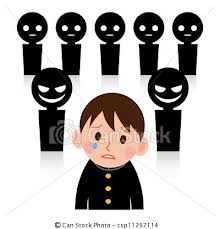
I’m getting rather tired of constantly reading in the media, the bullying they do..It seems no one can wear or do anything without the media doing some Poll or other to see how much of a “minger” that person is, or a statement of “woo look what she is “wearing” I think if the media were to send out a more positive vibes instead of putting things that make people turn into a pack of bullies then there would be a lot more nicer things in this world..Don’t you think?
 Julan62