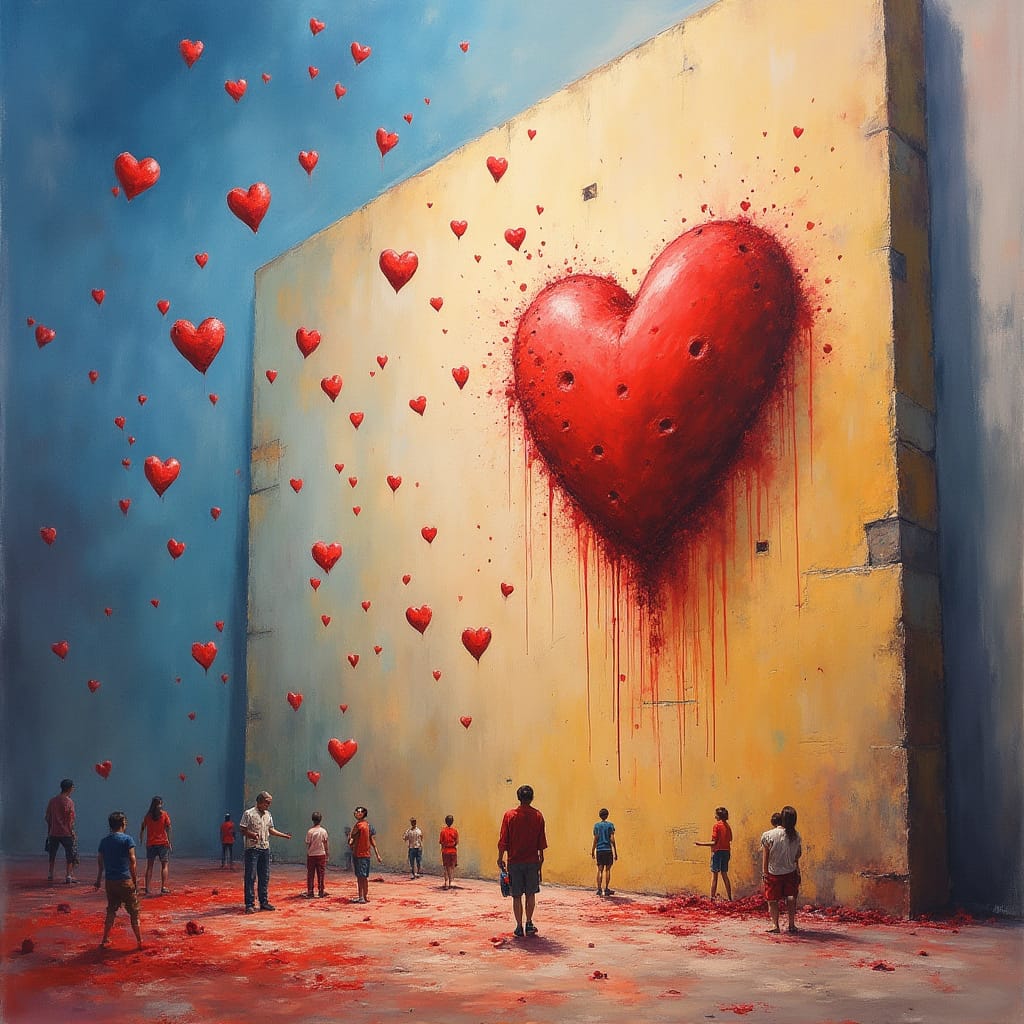
A shadow creeps where light once lay, A poison seeps into the day. Once hands were clasped in human grace, Now fear divides and scars replace.
The echoes of the past return, Old lessons are taught, yet none we learn. They build their walls, they mark their lines, With hollow words and hollow spines.
And watch as justice bends and falls. They paint their hatred in disguise, Yet we see through their veiled replies.
The colour fades from hopeful dreams, Replaced by cold and broken schemes. A love once free is bound in chains, As tyranny reclaims its reigns.
But still, we rise; we will not bow, Not then, not ever—not now. For love will burn through the darkest night, And truth will stand, and truth will fight.
So let them shout, let them conspire, We’ll fan the flames, ignite the fire. For though they try to make us small, Love and justice rise for all. JH
Jay was always the centre of attention. Not because she was the most beautiful or the most talented but because she had a unique gift – the ability to spin tales that were so compelling that people couldn’t help but believe her. Since she was a child, she would tell her grandmother stories, manipulating them in such a way that it made her seem like a damsel in distress. She pretended that people had hurt her, even if deep down she knew they were innocent.
It started innocuously. In elementary school, she’d say, “Grandma, Lila said my dress looked cheap.” Her grandmother, Mrs. Winters, would cluck sympathetically and give her an extra cookie.
In middle school, it became, “Grandma, Elise didn’t invite me to her party because she’s jealous of my grades.” Mrs. Winters would shake her head, lamenting the cruelty of young girls and buy Jay a new book or toy.
By high school, the stories were more elaborate. “Grandma, Coach Smith benched me today because I refused his advances.” Alarmed, Mrs. Winters would rush to the school, demanding justice.
Throughout all this, there was one person who seemed to be the constant target of Jay’s tales – her classmate, Tessa. Whether Tessa was spreading rumours, stealing boyfriends, or being plain mean, she was Jay’s go-to antagonist.
But Jay’s lies weren’t limited to her grandma. When Jay got married, she transferred her tales to her new audience – her mother-in-law, Mrs. Anderson. The stories still revolved around Tessa, who, according to Jay, was now trying to seduce Jay’s husband, Eric.
Mrs Anderson, being protective of her son, grew wary of Tessa, who had become a family friend. She’d glare at her during gatherings, making Tessa feel alienated and confused.
One day, while shopping, Mrs. Anderson ran into Mrs. Winters, Jay’s grandma. The two began discussing their shared woes – how Tessa was causing so much trouble for poor Jay. However, as they compared notes, discrepancies began to appear.
Mrs. Winters recalled a story Jay told about Tessa ruining Jay’s 16th birthday. Mrs. Anderson remembered a tale of Tessa trying to sabotage Jay’s college admissions. But when they examined the timelines, they realized these events couldn’t have happened concurrently.
Suspicion growing, they decided to confront Tessa. As Tessa listened, tears welled in her eyes. She revealed the truth – she had always admired Jay and tried to be her friend, but Jay kept pushing her away with lies.
Together, the three women approached Jay. When faced with the truth, Jay’s façade crumbled. She confessed, admitting she lied to gain sympathy and attention.
But the one thing Jay couldn’t bring herself to say was, “I’m sorry.”
The fallout was immense. Jay’s relationship with Eric was strained, her bond with her grandmother and mother-in-law was fractured, and Tessa, understandably, kept her distance.
In the end, Jay’s lies, like all lies, caught up with her. And while she never said sorry, the emptiness in her life was penance enough. The story serves as a cautionary tale for teens about the dangers of lying and the eventual consequences it brings. Don’t you think?
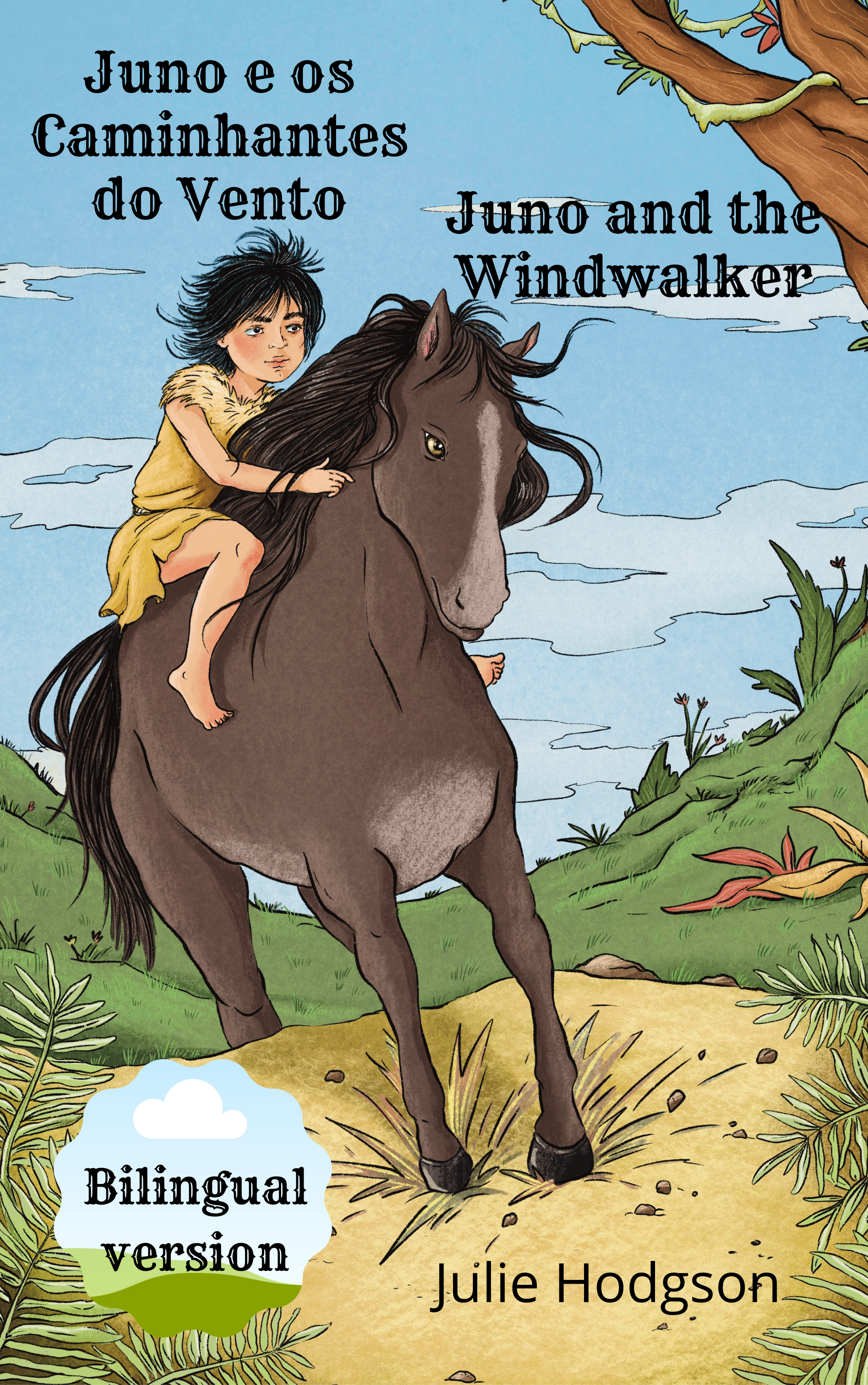
De um admirável mundo novo, Juno, um menino corajoso, enfrenta um desafio para testar a sua inteligência. Ele conhece os lendários Windwalkers, uma raça de seres que nunca antes vistos. Apenas se conheciam algumas histórias sobre essas criaturas. Em Mallum, o seu fiel cavalo, ele parte para as suas aventuras. A árvore de Yggdrassil estende as suas maravilhas diante dele, exigindo que Juno use a sua inteligência e não a sua força, testando-o para além da sua imaginação.
From a brave new world, Juno, a brave little boy, faces a challenge to test his wits. He meets the legendary Windwalkers, a race of beings that had never been seen. Only stories were told about these creatures. On Mallum, his trusty horse, he sets out on his adventures. The tree of Yggdrasil stretches out its wonders before him, requiring Juno to use his intelligence, not his strength, testing this young man beyond his imagination.
Just out my Elven fantasy novel, complete with a dragon called tally is flying off the shelves and is now, as I write it is at number 6 on the best sellers list.
I received its first review last week, pre-launch.
Here is it …
Reviewed by Cloie Belle Daffon for Readers’ Favorite 5 Stars
Life in the Enclave was much slower than in the cities, especially since Elves took their time because they have plenty of it; however, something seems to have happened. For once, the people of the Enclave seemed to be in a hurry. After the Rebellion, most Seeker Families were killed and in the Thrudore Enclave, only Sellusa’s family, the Natanus family, survived. Seekers were strong, courageous, and loyal and they arose in times of need. Selli has the blood of an adventurer in her and she was determined to carry out her duties and avenge her father too. She was summoned by Lady T’Serra because of urgent business – she found out that children have been going missing for the past two weeks. They have no idea who was behind this and it is up to her to look into the matter. Where will her adventures lead her to? What truths will she discover along the way? Read Whispers of the Gone by Julie Hodgson to find out! Whispers of the Gone is a young adult fantasy book by Julie Hodgson and illustrated by Mona Lena. Selli is a determined and brave fifteen-year-old who carries a heavy legacy on her shoulder as the last remaining Samúð in Haltasia. Her quest to find the missing children uncovered surprising truths and the mission was fraught with danger. Her distinctive character captured my attention from the get-go. I was drawn deeper into the story because of Hodgson’s amazing ability to capture the reader’s interest from the very first page and I was also hooked by the substantial plot and surprising twists along the way. The tale is filled with a healthy dose of adventure, conflict, mystery, and so much more! Hodgson created a unique world through detailed world-building and I couldn’t wait to explore every crevice of it as I read Selli’s story! Mona Lena’s illustrations of the characters and events add vision to this world and help the story come to life. The art adds a bright perspective to the already fantastic and engrossing tale. Fantastic work!
It’s also free for a few days on Amazon… So grab a copy while you can…
A stone slab with 3,000-year-old writing, known as the Cascajal Block, was discovered in the Mexican state of Veracruz and is an example of the oldest script in the Western Hemisphere, preceding the oldest Zapotec writing by approximately 500 years. It is thought to be Olmec.
The ALA Office for Intellectual Freedom tracked 729 challenges to library, school, and university materials and services in 2021. Of the 1597 books that were targeted, here are the most challenged, along with the reasons cited for censoring the books:
Gender Queer by Maia Kobabe Reasons: Banned, challenged, and restricted for LGBTQIA+ content, and because it was considered to have sexually explicit images
Lawn Boy by Jonathan Evison Reasons: Banned and challenged for LGBTQIA+ content and because it was considered to be sexually explicit
All Boys Aren’t Blue by George M. Johnson Reasons: Banned and challenged for LGBTQIA+ content, profanity, and because it was considered to be sexually explicit
Out of Darkness by Ashley Hope Perez Reasons: Banned, challenged, and restricted for depictions of abuse and because it was considered to be sexually explicit
The Hate U Give by Angie Thomas Reasons: Banned and challenged for profanity, violence, and because it was thought to promote an anti-police message and indoctrination of a social agenda
The Absolutely True Diary of a Part-Time Indian by Sherman Alexie Reasons: Banned and challenged for profanity, sexual references and use of a derogatory term
Me and Earl and the Dying Girl by Jesse Andrews Reasons: Banned and challenged because it was considered sexually explicit and degrading to women
The Bluest Eye by Toni Morrison Reasons: Banned and challenged because it depicts child sexual abuse and was considered sexually explicit
This Book is Gay by Juno Dawson Reasons: Banned, challenged, relocated, and restricted for providing sexual education and LGBTQIA+ content.
Beyond Magenta by Susan Kuklin Reasons: Banned and challenged for LGBTQIA+ content and because it was considered to be sexually explicit.
The Museum’s Library and Archives has digitised its oldest book, Historia Naturalis, to mark the tenth anniversary of the Biodiversity Heritage Library (BHL). See the physical copy on tour The original copy of Historia Naturalis will feature in the Museum’s international tour of some of its treasures, which begins in 2017 in Tokyo. The book is a small, unassuming volume that has been part of the ‘rare books’ collection for years but has attracted very little attention. Digital collections This digitisation project was part of the Museum’s Digital Collections Programme, which aims to make available the information found within the collections, from specimens to labels and archives. Expert preparation This project was carried out using specialist imaging and handling equipment to ensure that no physical damage occurred to the 547-year-old book. ‘Not that you can ever replace the sense of history and wonder of the actual physical item,’ adds Hart. Its author is Roman philosopher and scholar Gaius Plinius Secundus, commonly known as Pliny the Elder (AD 23-79). Questo e el libro che tracta di mercatantie et usanze de paesi The meaning of the title is ‘Book about the merchandise and customs of countries’. Each volume’s lead letter is painstakingly decorated (or illuminated) – a work of art in itself. More thorough readers may notice, however, descriptions such as that of headless people with eyes on their shoulders. Pacioli includes a chapter on tariffs in his book and it is obvious that a large part of this chapter is a copy of Chiarini’s earlier work. Written in Italian and intended for merchants, it is also known as a ‘tariff’ that merchants would use as a compendium of relative weights, measures and currencies when travelling and doing business with various European cities. This 1481 edition is the first printed version of the work. That honour goes to Questo e el libro che tracta di mercatantie et usanze de paesi, the last page recording that it was published in ‘MCCCCLXXXI. Historical Accounting Literature The ICAEW collection of historical accounting literature currently comprises around 3,000 volumes and includes works published from the 15th century to the early 20th century. Its 37 volumes spanned all knowledge of natural history at the time as well as mathematics, literature and art. The Museum’s copy is one of only 100 first editions. Visitors to the BHL website will be able to browse the book’s subjects – ranging from cosmology to animals and magic to botany – as related by Pliny around 2,000 years ago. The book provides and compares prices for a long list of cities in Italy and other major trading centres of Europe. A number of such bizarre passages show that Pliny and his contemporaries did not test all 37,000 entries. The collection includes books and journals in a variety of languages. Natural history, but not as we know it As one of the BHL’s founding institutional members, the Museum has digitised its copy of Historia Naturalis, which in turn will be the BHL’s oldest digitised book. The original Latin text will include a link to an English version, translated and edited in the nineteenth century by John Bostock and H T Riley. The oldest book in the ICAEW collection ICAEW has been collecting early works on accountancy for over 100 years and has one of the finest collections in the world, spanning the 15th century to the early 20th century. Historia Naturalis was one of the first manuscripts ever printed and, perhaps more importantly, the first published natural history book. The collection includes a copy of the earliest known printed book about double-entry book-keeping, Summa de arithmetica by Luca Pacioli However – this famous volume is NOT the oldest book in the library. Buy the book. Ongoing projects include digitising Mesozoic-Era collections as well as more than half a million butterflies and moths from the British Isles. Much of the paper nowadays is made from wood pulp and has been chemically treated, as opposed to the rag paper which was used for Historia Naturalis.’ The ancient first-edition copy of Historia Naturalis requires careful handling Not only does digitising Historia Naturalis benefit online visitors, it provides the Museum with a copy for preservation purposes. In addition to being an invaluable resource, the first edition is also beautiful to look at. There is no author named in the book but it is usually attributed to Giorgio di Lorenzo Chiarini. The Museum Library has so far contributed to the BHL 8,020 volumes from 1,096 titles, amounting to almost four million pages.
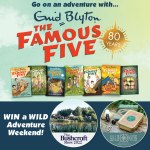
Today is the 80th anniversary of the beloved author Enid Blyton. It has been celebrated by a grotesque cover of her work, and the interior has been changed, her words censored, not only do the readers get a different angle on what the story is, the words are not the same. What is the point of reading an older author’s work if things are changed? Enid would be spinning in her grave if she knew all her arduous work had been defiled.
Here are some comments from Facebook….
Jan MullberryI thought this was a good deal until I remembered text had been changed. And then I look at the covers. They don’t represent kids of today or of yesterday like the originals. They represent cartoon characters. As a child, I’d look at those covers, and I had a picture in my head of boys and girls like me. How can you do that with these? You are supposed to be reading about real people, that’s what attracts kids or teenagers. How can you find common ground with cartoon characters? As for the supposedly offensive terms and names used, when I was a child, their names were just names, like my friends. There was no hidden agenda. Just like terms used. I was interested in the story and read it as fast as I could. I wasn’t questioning or picking fault with what was written. Kids don’t do that unless they’ve been brought up to not experience a real childhood. It seems to me these decisions have been made by stiff adults that have probably never immersed themselves in that world. Enid wrote such great books because she was part of that world. I honestly don’t think she’d agree with the changes. Because people that have passed will be looking down and thinking what a mad snowflake world, we live in. It’s a shame something so innocent has now been tainted and put in the same category as slave master statues. Shame on the decision-makers. And if you think names like Dick and Fanny are offensive then that says more about you than the kids that wouldn’t bat an eyelid, like I didn’t. Go woke, go broke as they say. I haven’t turned into a racist either, quite the opposite.
A very well put argument I should say… Thanks jan.
Soon books will be banned, literature censored! As this man puts it perfectly, via the New York times
Re “Politics Fuels Surge in Calls for Book Bans” (front page, Jan. 31):I am amazed that all of the people in a frenzy to ban books have overlooked a book that is in most public libraries, and features fratricide, incest, adultery, murder, drunkenness, slavery, bestiality, baby killing, torture, parents killing their own children, and soldiers slaughtering defenseless women and children. It’s almost guaranteed to give children, and even adults, nightmares. If you haven’t guessed by now, it’s called the Bible.
Steve Fox Columbia, Md.
We should not tamper with literature than has been written, we should never ban books, we should learn from them. We are not stupid and we have no need to be molly coddled by these types who wish us to read what they want us to read.


 Julan62